The future of enterprise AI isn't about isolated models making decisions in silos. It's about intelligent agents that communicate, collaborate, and orchestrate complex workflows across your entire technology stack. Today, we're exploring two transformative integration patterns that are reshaping how we build agentic systems: Agent-to-Agent (A2A) communication and the Model Context Protocol (MCP).
Explore the code: github.com/riverthink/agenticintegration
These aren't just theoretical concepts. We've built working demonstrations that showcase exactly how these patterns unlock unprecedented capabilities for healthcare providers, retail operations, and financial institutions. Let's dive into what makes these approaches so powerful.
The Power of Connected Intelligence
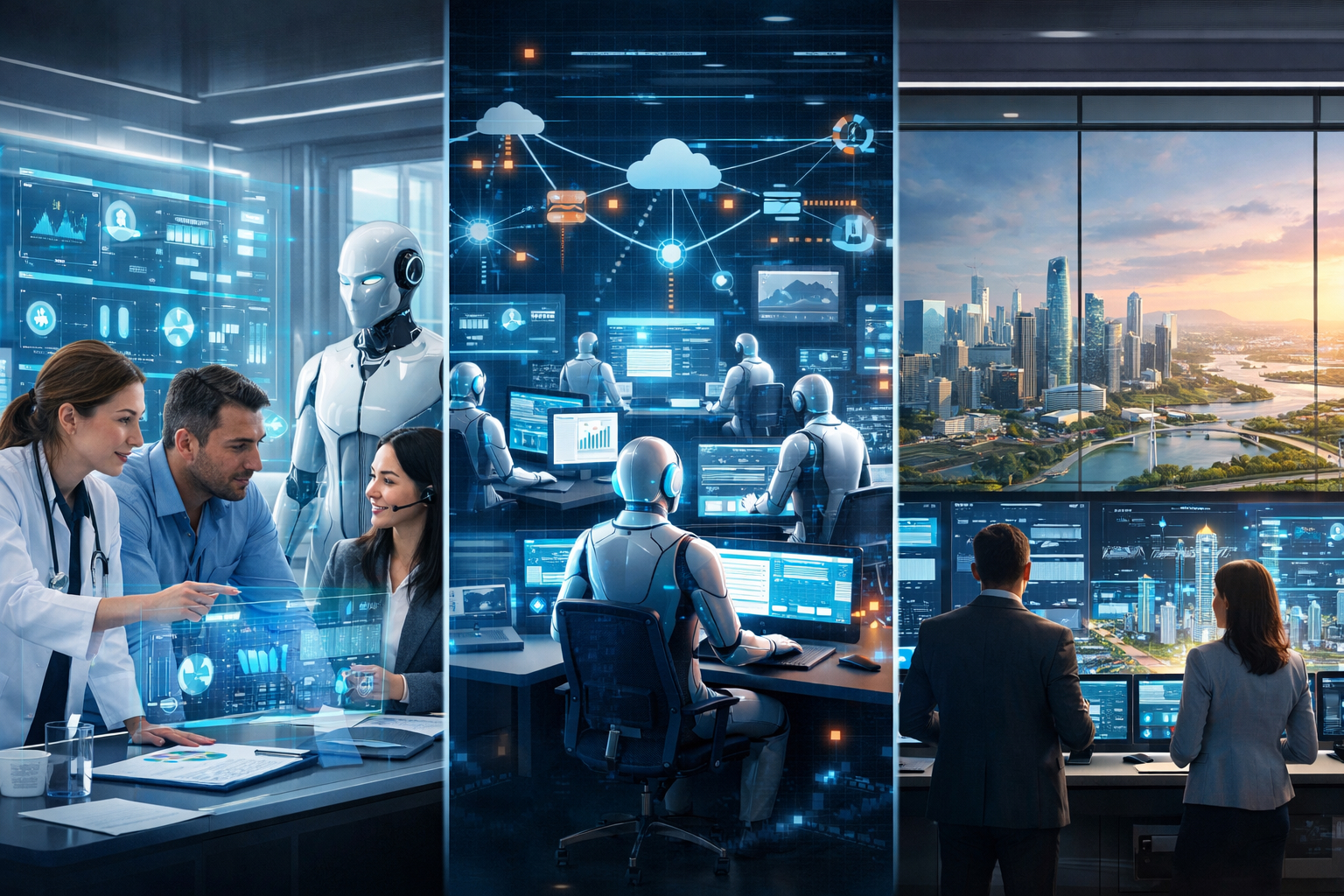
Imagine a world where your AI agents don't just respond to queries—they actively collaborate to solve complex problems. Where a patient-facing healthcare agent can seamlessly delegate to a specialized medical records agent. Where a retail customer service agent can consult with inventory, pricing, and shipping agents in real-time. Where financial advisors have AI assistants that orchestrate data from compliance, market analysis, and portfolio management systems.
This is the promise of modern agentic architecture, and it's available today.
Demo 1: Agent-to-Agent Communication with A2A Protocol
The Architecture
Our A2A demonstration showcases how two independent agents can communicate using a standardized protocol. Here's what makes it special:
Agent A runs on port 9999 and acts as an orchestrator. When it receives a request, it doesn't try to handle everything itself. Instead, it delegates to Agent B (running on port 9998), which specializes in processing specific types of requests.
Both agents leverage LangGraph, a framework for building stateful workflows, combined with the A2A SDK for standardized agent communication. The result? A clean, scalable architecture where agents can discover each other, communicate via HTTP, and collaborate on complex tasks.
How It Works
The implementation is elegantly simple yet powerful:
- Agent B sets up a LangGraph workflow that processes incoming messages and returns structured responses
- Agent A maintains its own LangGraph workflow that calls Agent B via the A2A client
- Messages flow through the A2A protocol with proper task tracking and event queuing
- Each agent exposes an AgentCard that describes its capabilities, skills, and communication preferences
- The system handles streaming responses, cancellation, and error recovery automatically
The beauty of this pattern lies in its modularity. Agent B doesn't need to know anything about Agent A beyond the protocol specification. Agent A can delegate to multiple specialized agents without managing complex integration code.
Real-World Applications
Healthcare: Coordinated Patient Care
Picture a hospital system where different AI agents specialize in different aspects of patient care:
- A triage agent receives patient symptoms and delegates to diagnostic specialists
- A diagnostic agent consults with medical history, lab results, and imaging agents
- Treatment planning agents coordinate with pharmacy, scheduling, and insurance verification agents
Each agent maintains its specialized knowledge while communicating through the A2A protocol. The result? Faster, more accurate care coordination without overwhelming human clinicians.
Retail: Intelligent Customer Experience
Retail operations involve countless interconnected decisions:
- A customer inquiry agent delegates to inventory checkers, pricing agents, and delivery estimators
- A returns processing agent coordinates with warehouse systems, refund processors, and customer satisfaction agents
- A personalization agent consults purchase history, preference analyzers, and recommendation engines
By decomposing these complex workflows into specialized agents, retailers can build systems that are both more powerful and easier to maintain.
Finance: Orchestrated Decision-Making
Financial services demand accuracy, compliance, and speed:
- A client-facing advisor agent delegates to market analysis, risk assessment, and compliance checking agents
- Trading agents coordinate with data feeds, model executors, and regulatory reporting agents
- Fraud detection agents collaborate with transaction analyzers, pattern recognizers, and case management agents
The A2A pattern enables financial institutions to build sophisticated AI systems while maintaining clear audit trails and separation of concerns.
Demo 2: Model Context Protocol for Tool Integration
The Architecture
While A2A handles agent-to-agent communication, MCP solves a different problem: How do we give agents access to external tools and data sources in a standardized way?
Our MCP demonstration features:
- An MCP Server that exposes weather and traffic data tools via Server-Sent Events (SSE)
- An MCP Client powered by GPT-4 that intelligently selects and uses the right tools based on user queries
The server is built with FastMCP, a lightweight framework that makes it trivial to expose Python functions as MCP tools. The client uses LangChain to process natural language queries and make intelligent tool selection decisions.
How It Works
The implementation demonstrates the full MCP lifecycle:
- The server decorates Python functions with
@app.tool(), automatically exposing them via the MCP protocol - The client connects to the server's SSE endpoint and retrieves the list of available tools
- When a user asks a question, the client sends it to an LLM along with tool specifications
- The LLM analyzes the question, selects the appropriate tool, and generates the right arguments
- The client calls the selected tool and returns structured results
In our demo, asking "What's the weather in Paris?" triggers the LLM to select the get_weather tool with {"city": "Paris"} as arguments. The system handles JSON schema validation, type checking, and error handling automatically.
Real-World Applications
Healthcare: Clinical Decision Support
Medical professionals need access to diverse data sources and tools:
- EHR query tools that retrieve patient histories with natural language
- Drug interaction checkers that analyze medication lists
- Clinical guideline search tools that find relevant protocols
- Lab result interpreters that provide context and flagging
An MCP-enabled healthcare agent can access all these tools through a single, standardized interface. Doctors ask questions in natural language, and the agent orchestrates the right combination of tools to provide comprehensive answers.
Retail: Omnichannel Operations
Retail systems connect to countless data sources:
- Inventory management systems across warehouses and stores
- Pricing engines with real-time competitor monitoring
- Customer data platforms with purchase history and preferences
- Logistics APIs providing shipping estimates and tracking
With MCP, a retail agent can query "Show me low-stock items in the Northwest region with high sales velocity" and automatically orchestrate calls to inventory, sales analytics, and geographic segmentation tools.
Finance: Data-Driven Insights
Financial analysis requires integrating multiple data streams:
- Market data feeds providing real-time prices and indicators
- Portfolio management systems with holdings and performance
- Risk calculation engines running stress tests and scenarios
- Regulatory databases checking compliance requirements
MCP enables financial agents to answer complex questions like "What's my portfolio's exposure to tech sector volatility given current market conditions?" by automatically selecting and combining the right analytical tools.
The Technical Foundation
Both demonstrations leverage modern Python async patterns, making them highly efficient and scalable:
A2A Demo Stack:
- A2A SDK: Standardized protocol for agent discovery and communication
- LangGraph: Stateful workflow orchestration for complex agent behaviors
- Uvicorn: High-performance ASGI server for async HTTP handling
- httpx: Modern async HTTP client for agent-to-agent calls
MCP Demo Stack:
- FastMCP: Lightweight framework for building MCP servers
- LangChain: LLM integration with tool calling capabilities
- OpenAI GPT-4: Intelligent tool selection and argument generation
- Server-Sent Events: Efficient streaming protocol for tool communication
Both patterns are production-ready, with proper error handling, type validation, and extensibility hooks.
Why These Patterns Matter Now
We're at an inflection point in enterprise AI adoption. Organizations have moved past proof-of-concept chatbots and are building production agentic systems. But without standardized integration patterns, these systems become brittle, hard to maintain, and impossible to scale.
The A2A protocol and MCP provide the standardization layer that the industry needs. They enable:
- Composability: Build specialized agents and combine them in new ways
- Interoperability: Agents from different vendors can communicate using standard protocols
- Maintainability: Changes to one agent don't cascade through the system
- Observability: Standard protocols enable standard monitoring and debugging tools
- Security: Well-defined boundaries make it easier to implement access controls and audit logs
Getting Started
Both demonstrations are open source and designed to be educational. You can run them locally in minutes:
The A2A example shows you how to build multi-agent workflows where agents delegate to each other. Start both agents, send a test request, and watch the logs to see how Agent A discovers and communicates with Agent B.
The MCP example demonstrates intelligent tool selection. Start the server, run the client, and ask natural language questions. Watch how the LLM analyzes your question and selects the right tool automatically.
The Path Forward
These patterns aren't just demos—they're blueprints for the next generation of intelligent systems. As you explore them, think about:
- Which parts of your current workflows could benefit from agent delegation?
- What data sources and tools could you expose via MCP?
- How could specialized agents improve accuracy while reducing complexity?
- Where are the natural boundaries between different agent responsibilities?
The future of enterprise AI is collaborative, composable, and connected. With patterns like A2A and MCP, that future is being built today.
Start Building
Clone the repository, run the examples, and see these patterns in action. Modify the agents to suit your needs. Expose your own tools via MCP. Build agent networks that solve your specific challenges.
The code is clear, well-documented, and designed for learning. Whether you're in healthcare, retail, finance, or any other industry, these integration patterns provide the foundation for building sophisticated agentic systems.
The question isn't whether your organization will adopt agentic AI. The question is how quickly you'll build the integration infrastructure to make it successful.
Start exploring today. The future is calling—and it's ready to collaborate.
About the Demos: These examples are built with production-quality frameworks and follow best practices for async Python development, error handling, and protocol implementation. They're designed to be both educational and adaptable to real-world use cases.
Try It Yourself: Both demos include complete setup instructions, test scripts, and sequence diagrams. Visit the repository to get started, and join the community of developers building the next generation of agentic systems.