January 2026 marks a clear inflection point for artificial intelligence in healthcare. Over the course of just a few weeks, four major developments revealed how large language models and agentic AI are moving from broad experimentation into domains where trust, safety, and measurable impact matter deeply. Together, these updates tell a connected story about maturity. They show an industry learning where AI fits, where it does not, and how it must be governed when human health is involved.
When General AI Meets Health Risk
On 2 January 2026, an investigation by The Guardian brought renewed scrutiny to AI generated health information appearing in consumer search results. Google had been rolling out AI Overviews that summarised answers at the top of search pages. While many worked as intended, several health related summaries were found to contain misleading or incomplete medical advice.
Examples included incorrect interpretations of blood test ranges and oversimplified nutritional guidance that lacked clinical context. Medical professionals warned that such summaries could be harmful when detached from patient specific factors such as age, sex, medical history, or medication use. In response, Google removed a number of these health related AI summaries and stated that improvements were underway to reduce the risk of harm.
This moment matters because it highlights a fundamental truth. General purpose AI systems, when placed in front of millions of people, can influence health decisions even when they were not designed to act as medical tools. The issue was not malicious intent, but misplaced authority. A short summary presented with confidence can feel definitive, even when medicine rarely is.
The takeaway was not that AI has no role in health, but that context and safeguards are essential. Without them, scale amplifies error.
A Shift Toward Regulated Clinical AI
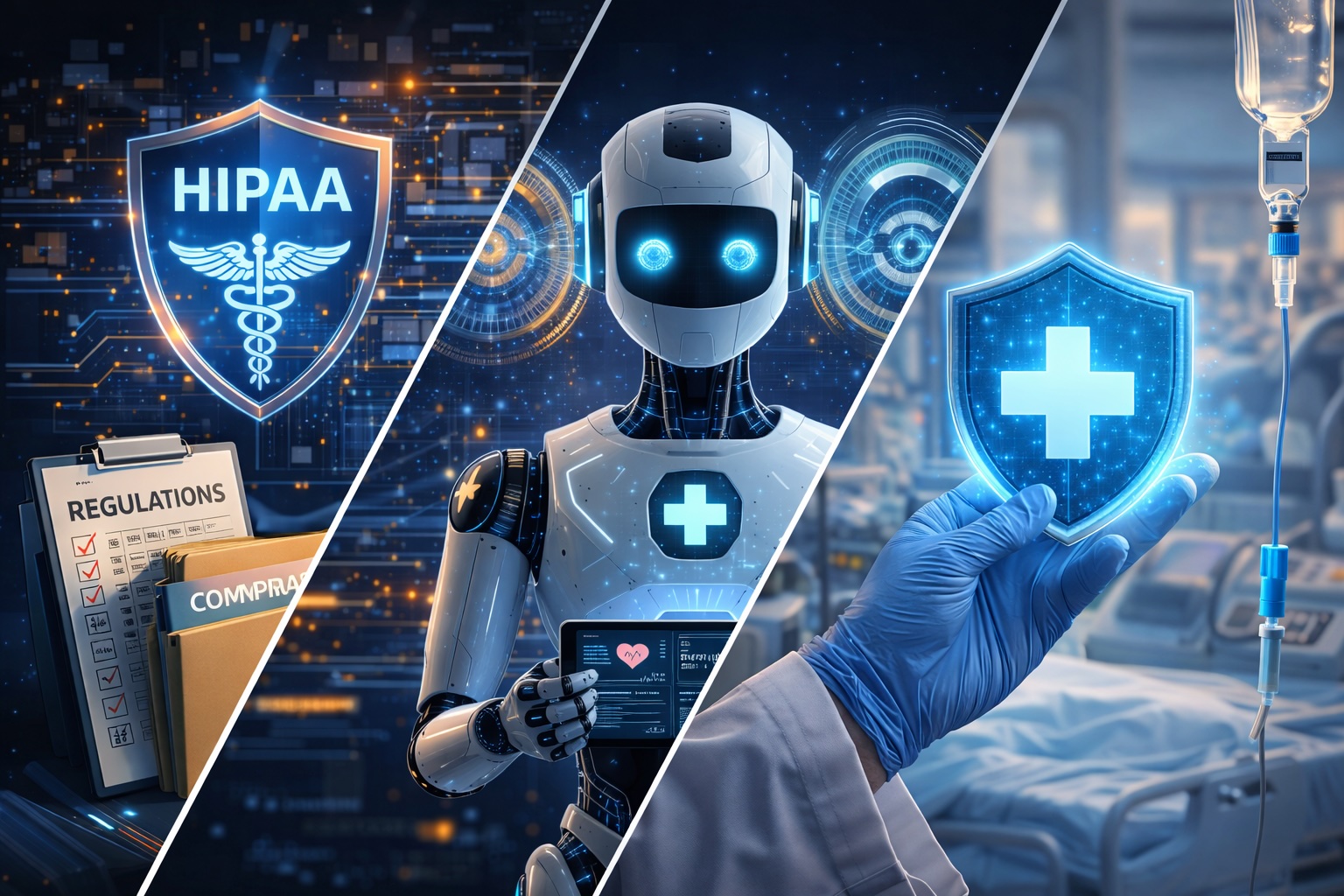
Just days later, OpenAI announced the launch of ChatGPT for Healthcare, reframing how LLMs are positioned in medical environments. Unlike consumer chat tools, this offering is designed explicitly for hospitals, clinics, and healthcare organisations operating under strict regulatory frameworks.
Crucially, the platform is HIPAA compliant, supporting encryption, audit logs, access controls, and Business Associate Agreements. These features acknowledge a reality long understood by healthcare providers. Innovation without compliance is not adoption.
The intent behind ChatGPT for Healthcare is not to diagnose patients or replace clinicians. Instead, it focuses on supporting workflows that already exist. Examples include summarising clinical notes, assisting with documentation, helping staff navigate internal policies, and synthesising large volumes of structured and unstructured information.
This distinction matters. Where consumer AI struggled by offering answers without sufficient guardrails, this model is embedded within governance. The system is constrained by design, monitored by organisations, and operated by trained professionals. It reflects a growing understanding that healthcare AI must be enterprise first, not consumer first.
The contrast with the earlier search controversy is striking. One highlights the risks of uncontextualised medical information at scale. The other shows what happens when AI is deployed inside regulated boundaries with accountability built in.
From Language to Discovery in the Lab
While clinical workflows were evolving, another development expanded the scope of healthcare AI far beyond text. In January 2026, NVIDIA and Eli Lilly announced an expanded partnership focused on AI driven drug discovery. Their collaboration centres on using advanced AI platforms to accelerate the identification and development of new therapies.
Drug discovery is a slow and expensive process. Traditional pipelines can take over a decade and cost billions. The partnership aims to change that by applying AI systems that can analyse biological data, simulate molecular interactions, and guide experimental decisions. This is where agentic AI becomes especially relevant.
Unlike simple prediction models, agentic systems can manage sequences of tasks. They can evaluate results, propose next experiments, and optimise workflows over time. In this context, AI does not just analyse data. It participates in the research process itself.
The significance here is scale. This is not a pilot or proof of concept. It is a strategic investment by a major pharmaceutical company and one of the world’s leading AI infrastructure providers. It signals confidence that AI is ready to influence the earliest stages of medicine, long before a patient ever enters a clinic.
It also shows how healthcare AI is diversifying. Language models support people. Agentic systems support discovery. Both are needed, but they operate in very different risk profiles and timelines.
Seeing and Hearing Medicine with MedGemma
Completing this picture, Google Research released MedGemma 1.5 in January 2026, extending AI capabilities into medical imaging and clinical speech. This update builds on earlier MedGemma models by improving interpretation of medical images and introducing advanced medical speech to text functionality.
MedGemma 1.5 reflects a broader shift toward multimodal AI. Healthcare data is rarely just text. It includes scans, images, spoken notes, and signals. Bringing these together allows AI systems to understand clinical situations more holistically.
In practical terms, this means radiology images can be analysed alongside dictated observations, or spoken clinical notes can be transcribed and structured with medical awareness. Early benchmarks suggest strong performance in specific imaging tasks, pointing toward AI that can meaningfully assist specialists rather than simply automate clerical work.
Importantly, MedGemma is positioned as a research and development tool, not a standalone diagnostic authority. This reinforces a pattern seen across all four developments. The most credible progress comes when AI is framed as an assistant within expert led systems.
An Emerging Pattern of Maturity
Viewed together, these January updates reveal how healthcare AI is growing up.
The removal of misleading search summaries shows the limits of general AI when applied without context. The launch of a HIPAA compliant clinical platform demonstrates how those limits can be addressed through governance and design. The NVIDIA and Lilly partnership illustrates AI’s role in accelerating scientific discovery where human experimentation alone struggles with scale. MedGemma 1.5 highlights the move toward multimodal systems that reflect how medicine actually works.
What connects these stories is not technology alone, but intent. The industry is learning to ask better questions. Where should AI speak directly to patients, if at all. Where should it support clinicians behind the scenes. Where can it safely explore possibilities in laboratories and research environments.
This moment does not signal an end state. It signals a recalibration. LLMs and agentic AI are no longer novelties in healthcare. They are tools being shaped by regulation, ethics, and real world constraints. The progress of January 2026 shows that the future of healthcare AI will be defined less by bold claims and more by careful integration into systems that already carry profound responsibility.