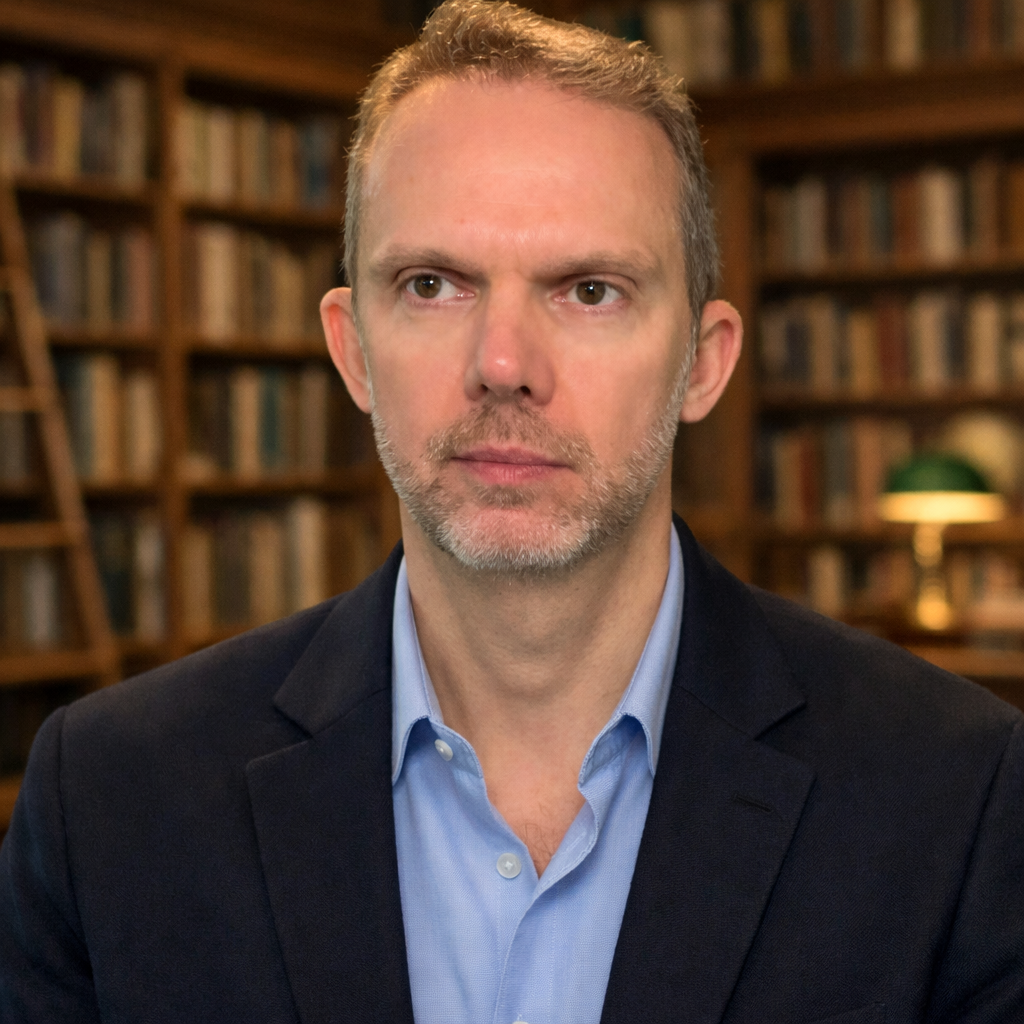

At the London Tech Show 2026 at ExCeL, the stage lights turned to Baroness Martha Lane Fox, one of the UK’s most influential technology leaders and a co founder of lastminute.com. Martha has lived through the entire arc of the modern internet, from the early ecommerce experiments of the late 1990s to today’s rapidly evolving AI landscape.
Her talk offered something rare. Perspective.
Most discussions about artificial intelligence start with the future. Martha began somewhere more useful. The past.
When the internet was still a strange idea
In 1998 Martha was helping build lastminute.com, one of the earliest online travel businesses. The technology itself was not the hardest part of the job.
The real challenge was persuading people that buying something online was even possible.
Customers genuinely worried that entering their credit card details into a website might cause the money to vanish into the ether.
Today that concern feels almost charming. Online payments are routine. Digital services underpin entire industries. Yet at the time it felt radical.
The late nineties carried a sense of momentum. The UK technology scene was buzzing. New companies were emerging. The internet felt like an open frontier.
And, like all frontiers, it came with a few unexpected stories.
A lesson in unintended consequences
One early feature on lastminute.com copied something Amazon had pioneered. One click purchasing.
The feature stored customer information so future bookings could happen instantly. Convenient and efficient.
Until one customer phoned customer services furious.
He had booked a trip using details saved from a previous holiday. Unfortunately the earlier trip had not been with his wife.
Technology moves quickly. Human life sometimes catches up a little more slowly.
When optimism met reality
The dot com era eventually hit turbulence. Markets shifted. Companies disappeared. Businesses that had strong foundations survived while others quietly vanished.
Around the same time Martha experienced a personal turning point. A serious illness kept her in hospital for an extended period and offered a very different view of technology’s role in society.
Lying in hospital, surrounded by paper records and fragmented information systems, she saw how uneven the digital revolution had been.
The world she had come from was built on databases, services and real time information. The systems around her looked very different.
Technology had transformed commerce.
Many public services still had a long journey ahead.
The unfinished digital transformation
Martha later helped shape the UK Government Digital Service, an effort to modernise how public services are delivered.
That work revealed something important.
Digital progress had not reached everyone equally.
During the COVID years this became painfully visible. Families shared a single phone so children could attend online lessons. Some households chose between buying mobile data or buying food.
Connectivity had quietly become essential infrastructure.
In the AI era this question becomes even more urgent.
Enter the AI first world
Martha believes the technology landscape has shifted once again.
Artificial intelligence tools now appear at extraordinary speed. Systems released a few months ago already feel outdated as new capabilities arrive.
The shift is profound because it changes who can create technology.
For decades software development required specialist skills and expensive infrastructure. Today many tools are accessible to anyone curious enough to experiment.
Which leads to Martha’s most striking observation.
The price of initiative has collapsed
To illustrate the point Martha described a simple weekend experiment.
She enjoys hosting dinner parties and spends far too long thinking about seating arrangements. With a few AI tools she built a small application that helped organise the seating plan.
It took less than an hour.
No large engineering team. No long development cycle. Just curiosity and accessible tools.
If that kind of experimentation becomes normal, creativity expands dramatically.
The barriers to building ideas are lower than at any moment in the history of technology.
The new divide
Yet the same tools that create opportunity can also create inequality.
Martha sees a growing gap between two groups.
Those who understand what these tools can do.
And those who have never tried them.
Access matters.
That means ensuring AI tools appear not just in research labs and technology companies, but in schools, job centres, small businesses and local communities.
Learning happens through use.
Curiosity grows through experimentation.
The skills that will matter most
When asked about the skills needed for the future workforce, Martha offered an answer that surprised some people.
She studied classics and history rather than computer science.
Her view is that the most important capabilities are not purely technical.
Critical thinking.
Curiosity.
The ability to ask questions.
Comfort with ambiguity.
Technical expertise will remain vital. Engineers and researchers continue to shape the foundations of modern technology.
Yet in a world where tools evolve rapidly, adaptability becomes equally important.
The importance of diversity in building systems
Another theme Martha returned to repeatedly was representation.
Technology shapes society. The people building these systems influence the outcomes they produce.
Yet many technology organisations still lack diversity in leadership and decision making roles.
That absence carries economic consequences.
Products built by narrow teams risk missing entire groups of users.
More diverse teams create stronger ideas, better products and healthier technology ecosystems.
A moment for the UK technology sector
Martha also challenged the UK audience to recognise something positive.
Britain remains one of the most significant technology economies in the world.
The country produces world class research.
Investment continues to flow into AI companies.
Startups and scaleups are emerging across sectors.
The challenge is not capability.
The challenge is confidence.
The UK already plays a major role in shaping global technology. Recognising that position helps build momentum for what comes next.
Choosing optimism
Martha closed her talk with a message that balanced realism with optimism.
She has lived through several waves of technological transformation.
The early internet boom.
The dot com crash.
The rise of mobile platforms.
The expansion of digital services.
Now the AI era.
Each wave created disruption. Each wave also created opportunity.
The AI era offers extraordinary possibilities. Creativity is expanding. Barriers to building ideas are falling. Entire industries are beginning to rethink how work happens.
If access widens, if diverse voices shape the systems we build, and if organisations invest seriously in skills, the next phase of the digital economy could unlock remarkable progress.
For the next generation entering the workforce, the tools available will be more powerful than anything previous generations imagined.
Which makes this moment less about fear and more about responsibility.
The future of work is being written right now.