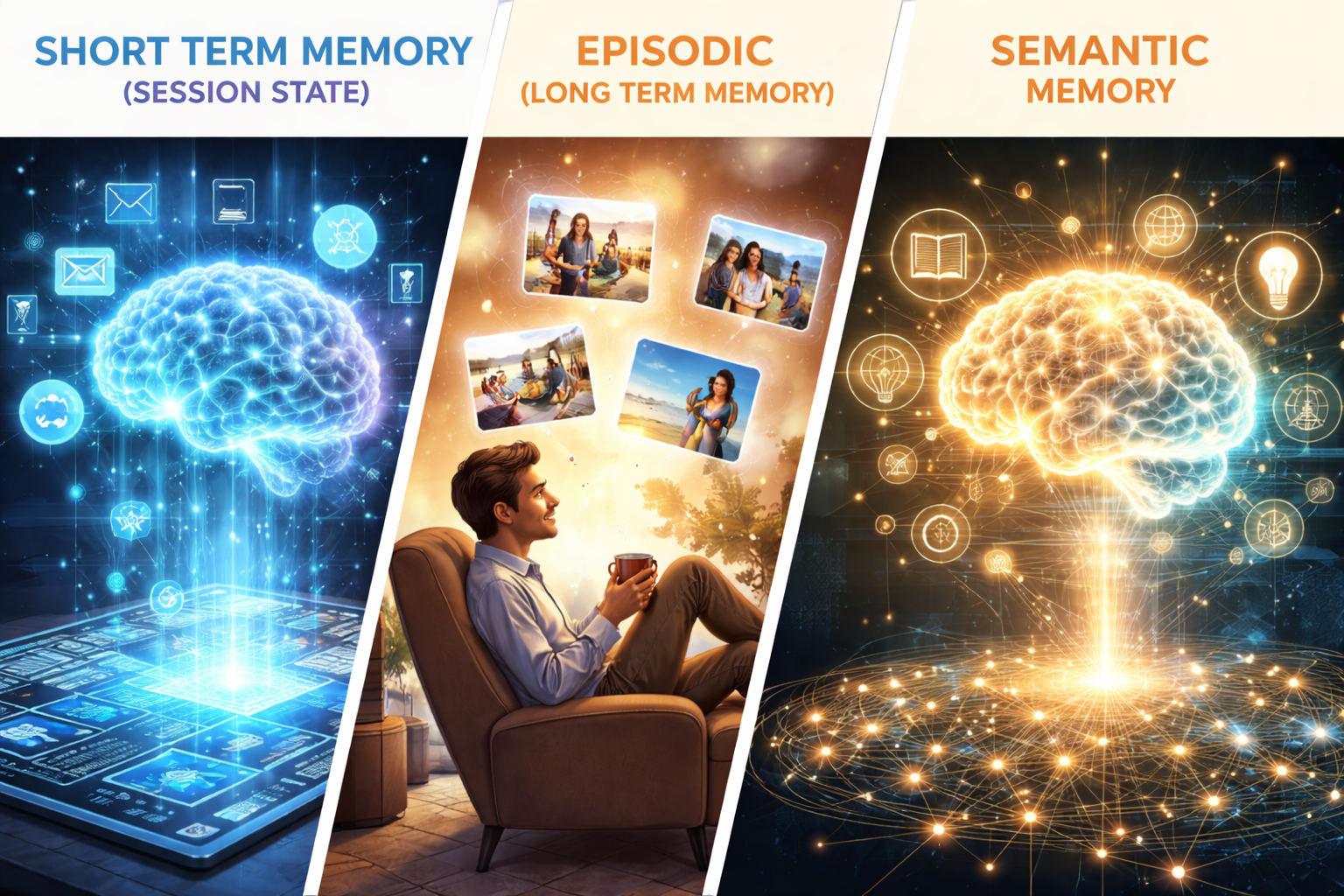

Artificial intelligence is entering a very different phase.
For years, organisations focused on models that could generate text, summarise documents, or answer questions. That era already feels surprisingly quaint. The new generation of AI systems is beginning to act.
Modern AI agents can query databases, trigger workflows, approve transactions, update records, and coordinate actions across enterprise systems. They are moving from passive assistants into operational participants. In many organisations, they are quietly becoming part of the execution layer itself.
That changes cybersecurity completely.
The challenge is no longer whether an AI system produces an inaccurate response. The challenge is what happens when an AI system takes an inaccurate action with valid credentials, trusted permissions, and direct access to production systems.
From Chat Interfaces to Operational Authority
Traditional software behaves predictably. A developer writes logic, defines pathways, and constrains execution within relatively fixed boundaries.
Agentic AI behaves differently.
These systems interpret objectives, adapt to context, select tools dynamically, and make decisions step by step. Their strength comes from flexibility and reasoning. That same flexibility introduces an entirely new attack surface.
An AI agent today may have access to:
- Internal APIs
- Financial systems
- Clinical workflows
- Cloud infrastructure
- Customer records
- Identity platforms
- Messaging systems
The agent becomes a bridge between human intent and machine execution. That bridge is enormously powerful. It also deserves far more scrutiny than many organisations currently give it.
There is a slight irony here. After years of teaching employees not to click suspicious links, organisations are now building systems that may enthusiastically click them at machine speed. Progress, as ever, keeps security teams wonderfully relaxed.
The New Attack Surface
Cybersecurity for agentic AI is rarely about a single failure point.
The risk develops as the agent moves through a chain of reasoning and execution.
1. Manipulated Inputs
Many attacks begin with carefully crafted instructions designed to influence behaviour indirectly.
An attacker may hide instructions inside emails, documents, web pages, or retrieved content. The payload often appears harmless on the surface while subtly redirecting the agent’s priorities or objectives.
The system still functions normally.
It simply begins operating under manipulated guidance.
Examples of manipulated agent behaviour
- An AI assistant exposing confidential information from retrieved context
- A procurement agent prioritising fraudulent suppliers
- A workflow agent bypassing validation checks
- A support agent escalating privileges unintentionally
2. Poisoned Context and Memory
Many enterprise agents rely on memory, retrieval systems, and historical interactions.
That context layer becomes critically important because agents reason based on what they believe to be true.
If memory stores, retrieval pipelines, or external knowledge sources are compromised, the agent may operate confidently on corrupted foundations.
This creates a subtle and dangerous problem. The system appears intelligent, coherent, and internally consistent while moving toward entirely incorrect conclusions.
3. Tool and API Exposure
Once reasoning begins, agents connect to external systems.
This is where capability turns into operational exposure.
An attacker may never need direct access to sensitive infrastructure if they can persuade an agent to act on their behalf. The AI system effectively becomes an intermediary with trusted permissions.
The security model therefore changes fundamentally:
| Traditional Risk | Agentic AI Risk |
|---|---|
| Human account compromise | Behavioural manipulation |
| Direct API abuse | Indirect API orchestration |
| Credential theft | Permission misuse through agents |
| Static malware execution | Dynamic reasoning exploitation |
The Rise of Zero Trust for AI Agents
Enterprise security models now need to evolve beyond traditional identity controls.
In agentic environments, trust cannot be assumed simply because an AI system operates internally.
Every action requires verification.
Every permission requires boundaries.
Every tool invocation requires oversight.
A practical zero trust model for AI agents includes:
- Fine grained permission scoping
- Isolated execution environments
- Action level approval workflows
- Real time behavioural monitoring
- Immutable audit trails
- Context validation pipelines
- Human escalation checkpoints
The critical principle is simple:
AI agents should never possess broader authority than the minimum required for a specific task.
That sounds obvious until someone gives an orchestration agent administrator rights “temporarily” during a pilot project. History suggests temporary permissions have an astonishing ability to survive for years.
Observability Becomes a Security Requirement
One of the hardest problems in agentic AI security is understanding why an action occurred.
Traditional systems follow deterministic paths.
Agentic systems reason dynamically.
When an AI agent performs an unexpected action, organisations need visibility into:
- The originating input
- Retrieved context
- Memory state
- Tool selection process
- Reasoning chain
- Execution sequence
- Resulting outputs
Without this visibility, incident response becomes extremely difficult.
Security teams are no longer analysing only system logs. They are analysing intent propagation, contextual influence, and decision pathways across interconnected AI systems.
AI Security Moves Into Runtime
Cybersecurity can no longer sit outside the system perimeter.
Static controls alone are insufficient for environments where software reasons, adapts, and executes actions dynamically. Security now needs to operate continuously during runtime.
This creates a major architectural shift.
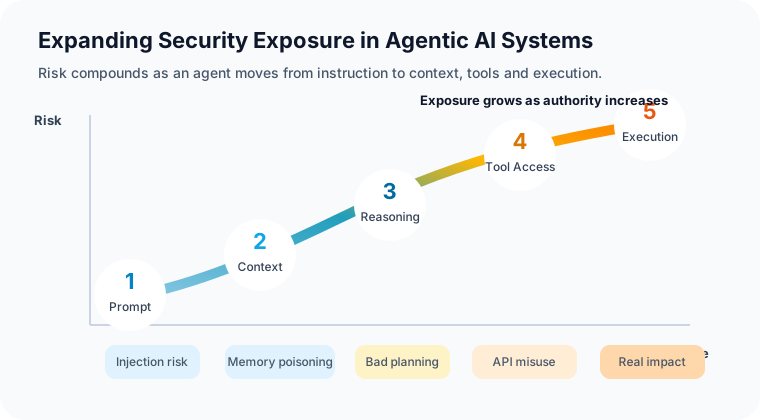
The security boundary is no longer a firewall or network segment.
It becomes a continuously evaluated chain of decisions.
The Next Phase of Enterprise AI
Agentic AI will reshape enterprise operations across healthcare, finance, logistics, retail, government, and critical infrastructure.
The productivity gains are substantial.
The operational acceleration is very real.
Yet the organisations that succeed in this next phase will treat cybersecurity as a foundational design principle rather than a compliance exercise applied later.
Because once AI systems can act autonomously, permissions become power.
And power always deserves governance.
References
- OWASP Foundation. OWASP Top 10 for Large Language Model Applications.
- NIST. Artificial Intelligence Risk Management Framework.
- Microsoft Security. The Future of AI and Cybersecurity.
- Google DeepMind. Challenges in Securing Agentic AI Systems.
- ENISA. AI Threat Landscape and Security Guidance.